MOOTION · AUTOFLOW
Mootion Autoflow: making multi-agent video creation understandable
Role-based agents, explicit interaction states, and progressive feedback help creators follow generation while retaining control over key decisions.
Design context
Video generation spans planning, configuration, scriptwriting, storyboarding, animation, and editing. This case study focuses on making those stages visible and allowing users to adjust key parameters within the generation flow.
01 / AGENTIC WORKFLOWS
Designing Control for a Multi-Agent AI Workflow
Let AI configure key video-generation parameters while keeping users in control.
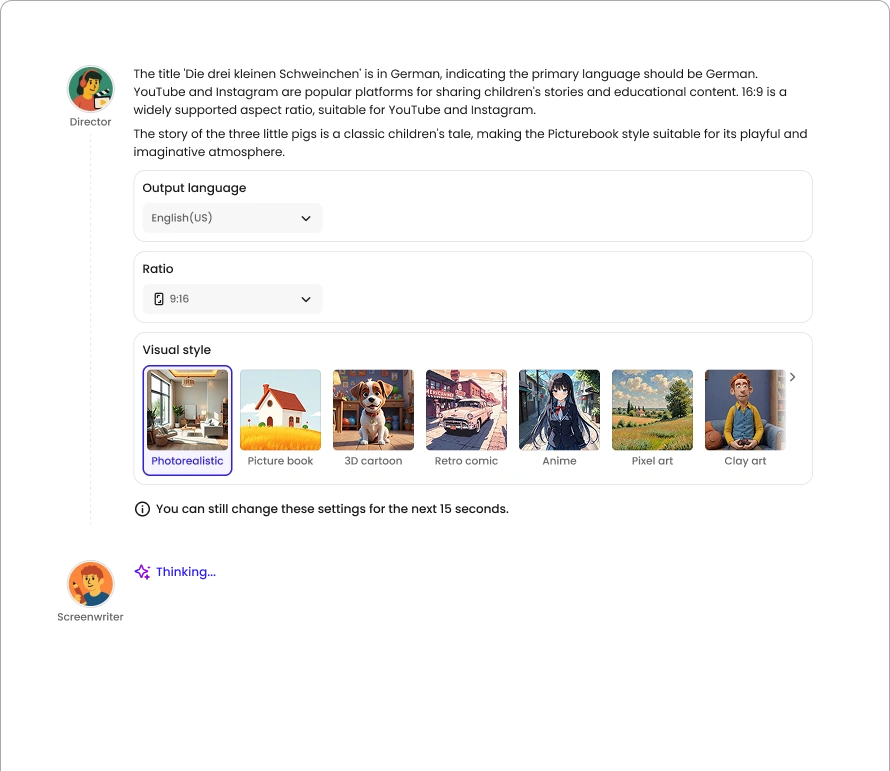
- Intent-driven configurationAI agents automatically configure key video-generation parameters based on user intent.
- Clear interaction statesEditable and locked states are visually differentiated, so users always know when they can intervene.
- Visible progressExplicit system states such as “Thinking…” make progress visible during long-running generation.
- A window for interventionA short adjustment window lets users override AI decisions without interrupting the generation flow.
02 / MULTI-AGENT COLLABORATION
Role-Based Multi-Agent Workflow
Turn waiting into observable progress.
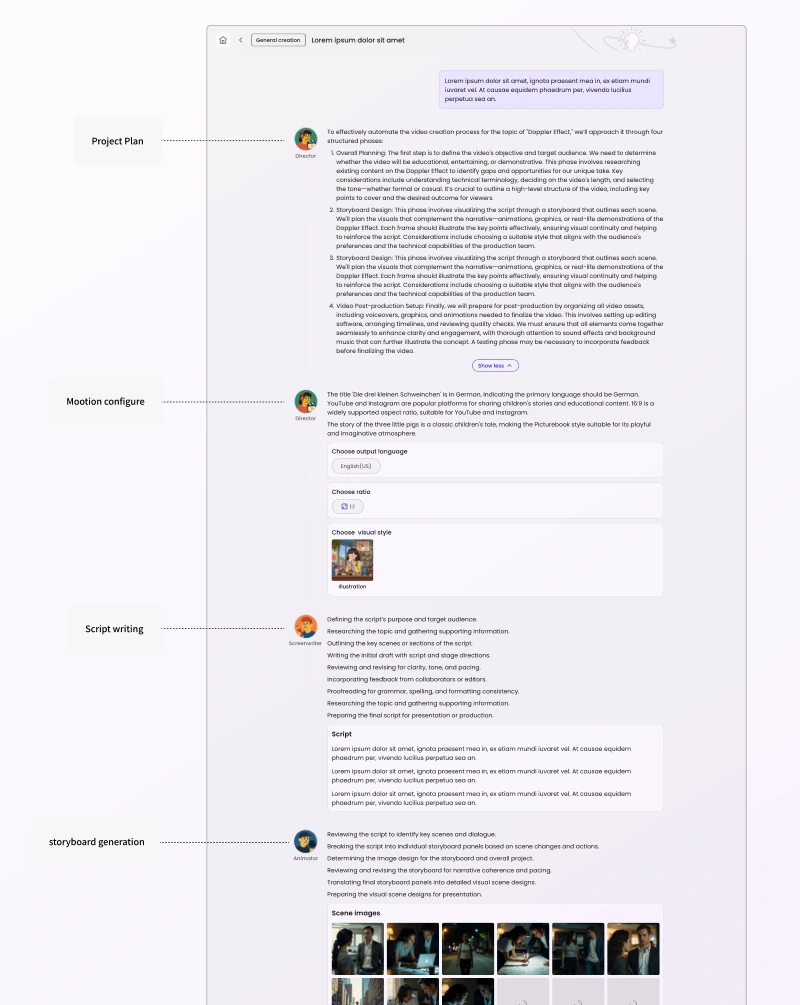
- Specialized responsibilitiesSpecialized agents take ownership of planning, scriptwriting, storyboarding, animation, and editing.
- A conversational activity streamInstead of hiding long-running AI work behind a loading screen, intermediate outputs are surfaced through a conversational activity stream.
- A continuous sense of progressThis makes the generation process understandable and gives users a continuous sense of progress.
Autoflow redesign~30% → ~60%Video completion after the redesign
05 / PROGRESS & FEEDBACK
Skeleton States & Progressive Streaming
Provide immediate feedback while generation is underway.
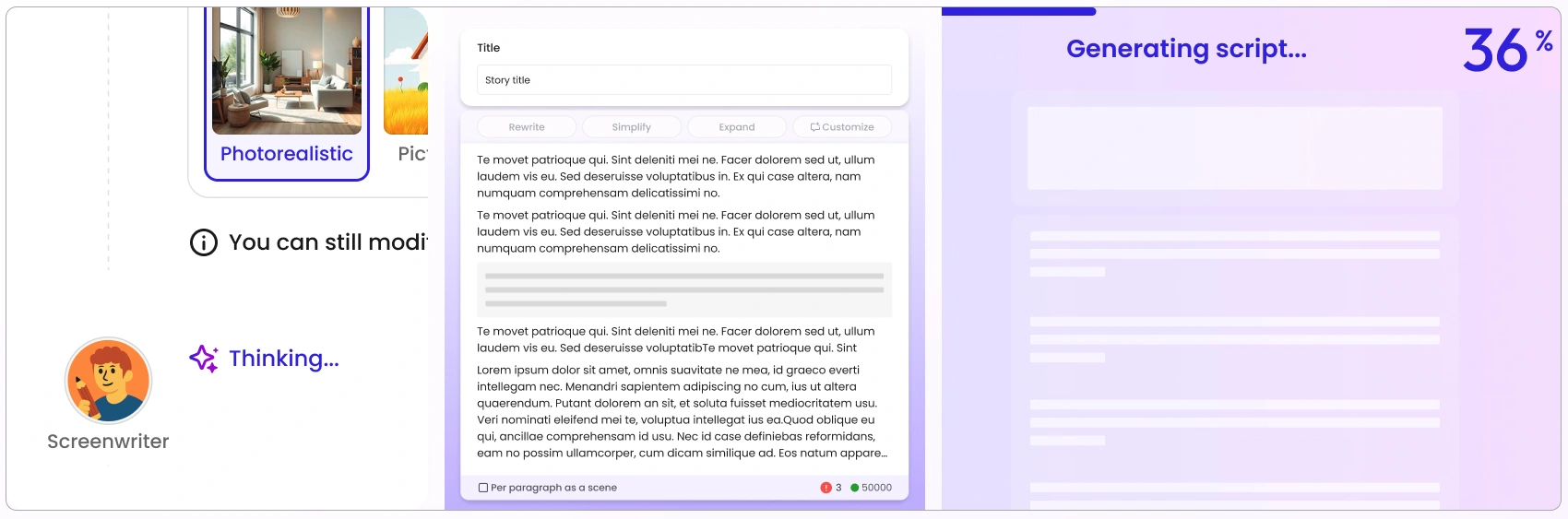
- Immediate feedbackUse skeleton states to preserve layout and provide immediate feedback while content is being generated.
- Progressive streamingStream generated content progressively instead of waiting for the entire response to complete.
- Support longer tasksFor long-running tasks, communicate delays clearly and allow users to continue working elsewhere.